How a Dog Backseat Tent Keeps Your Dog Out of the Front Seat
The short answer
- A dog backseat tent gives your dog a clear rear-seat area and helps reduce front-seat climbing.
- Measure your back seat, headroom, and buckle access before you buy or install anything.
- Use a harness or carrier as needed, and never block seat belts, buckles, pedals, or airbags.
- A seat cover or cargo barrier can add protection and help keep the setup stable.
If your dog keeps trying to climb into the front seat, the problem is usually a mix of excitement, lack of boundaries, and loose space to move around. A dog backseat tent helps by turning the back seat into a defined area instead of one open bench.
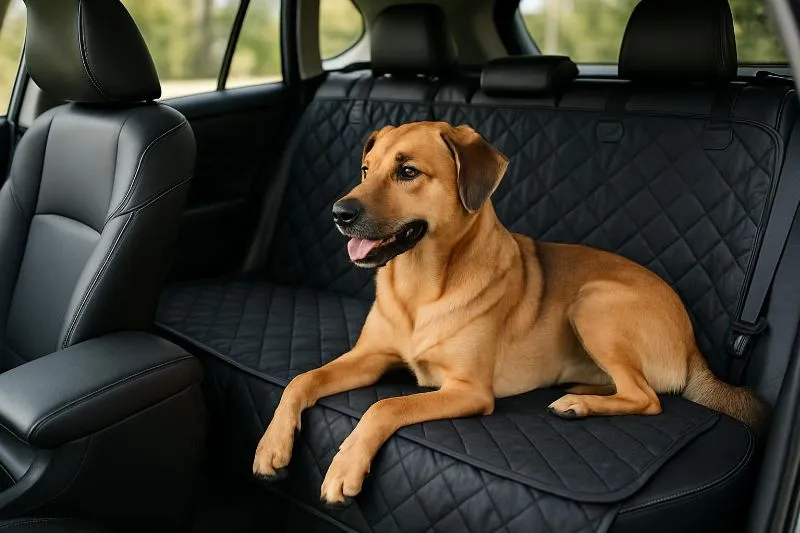
That setup can also protect upholstery from fur, dirt, and claw marks while giving your dog a more predictable spot to ride. The goal is not just a cleaner car; it is a calmer, less distracting trip for everyone in the vehicle.
Why dogs try to move to the front seat
Dogs often push forward because they want to see you, follow movement, or get closer to the action. In a bare back seat, there is no clear boundary, so even a well-behaved dog may wander forward during starts, stops, or turns.
A defined space helps because it changes the layout of the car. Instead of one open area, your dog gets a contained zone that is easier to understand and harder to cross. That can reduce pacing, jumping, and sudden lunges toward the center console or driver.
- Excitement during the first few minutes of a ride
- Curiosity about people, food, or motion up front
- Loose back-seat space with no boundary
- Slipping on slick upholstery during turns
How a dog backseat tent works
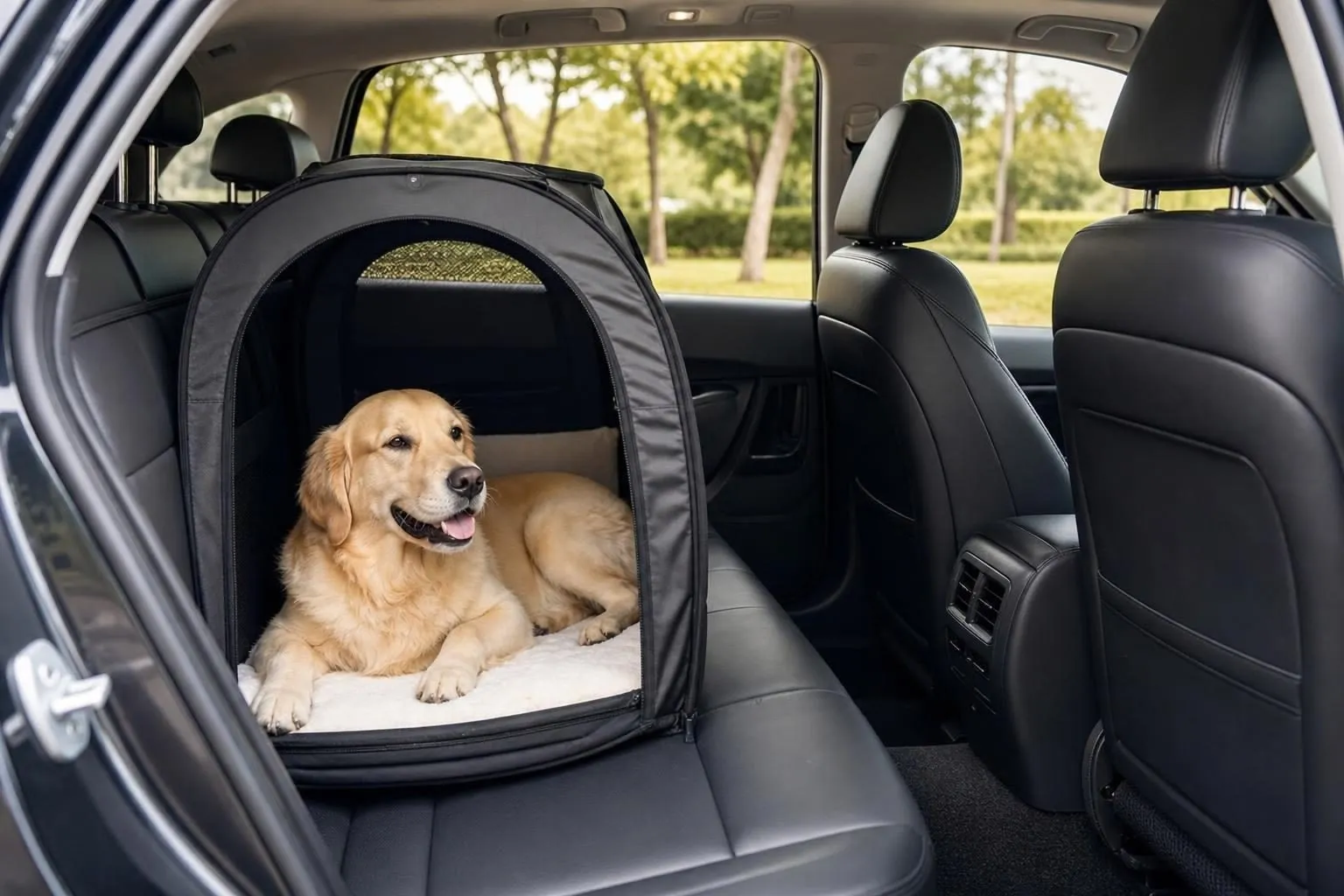
A dog backseat tent stretches across the rear seat area to create a raised, enclosed space your dog can rest in. It usually covers the seat surface and adds side walls or panels that help keep paws and fur contained.
This kind of setup works best when it fits snugly and does not shift. It should still leave easy access to seat belts and buckles if you need them, and it must never interfere with the driver’s view, airbags, or any controls. For pets, use a proper restraint such as a crash-tested harness or carrier when appropriate.
- Creates a visual boundary your dog can learn quickly
- Helps keep hair, dirt, and paw prints off the seat
- Can make the back seat feel more stable and secure
- Works best when installed tightly with no gaps or sagging
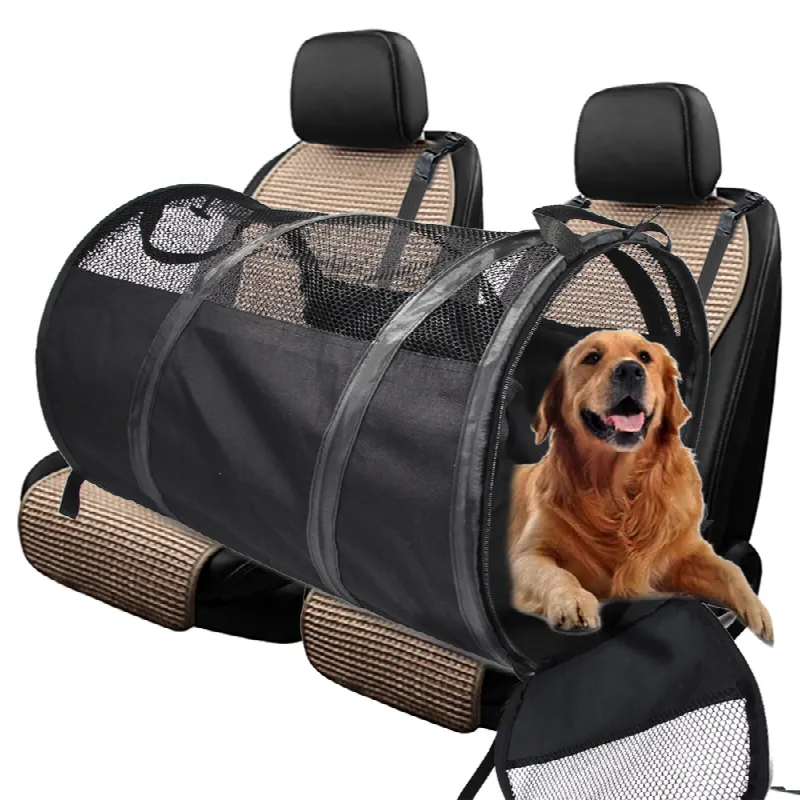
This is the main solution for creating a defined rear-seat space that helps keep an excited dog out of the front seat while protecting the upholstery.
What to measure before you set one up
Before you buy or install anything, measure the width of your back seat from door to door and the depth of the seating area from the backrest to the seat edge. If the product includes side panels or support rods, check the available headroom too.
You should also confirm how the setup will affect buckle access. Some dogs ride with a harness clipped to the seat belt, while others use a carrier. Whatever you choose, make sure the restraint fits correctly and that the seat belt path stays clear and usable.
If your vehicle has rear air vents, cup holders, or fold-down features, check whether the tent will cover them. A good fit should be stable without pressing against latches, blocking buckles, or forcing the panels to bow out.
- Measure seat width, depth, and headroom
- Check buckle and seat belt access before installing
- Confirm the setup won’t block vents or storage features
- Leave pedals, airbags, and the driver’s area completely clear
How to install it so it stays put
Start with a clean seat so the base lays flat. If your pet setup includes straps, anchors, or clips, tighten them evenly so the tent does not slide when your dog gets in or out. A loose setup can feel unstable and encourage movement toward the front.
Keep the front seat as free of temptation as possible. Remove food, toys, and anything dangling from the center area. If your dog still tries to climb forward, a rear-seat barrier can help reinforce the boundary without crowding the cabin.
After installation, do a short test drive in a safe area. Watch for shifting, folded edges, or places where your dog could slip under a panel. If it moves around, re-tighten it before longer trips.
- Vacuum and wipe the seat before setup
- Tighten straps and check for shifting
- Remove front-seat temptations like snacks or toys
- Test the fit on a short drive before a longer trip
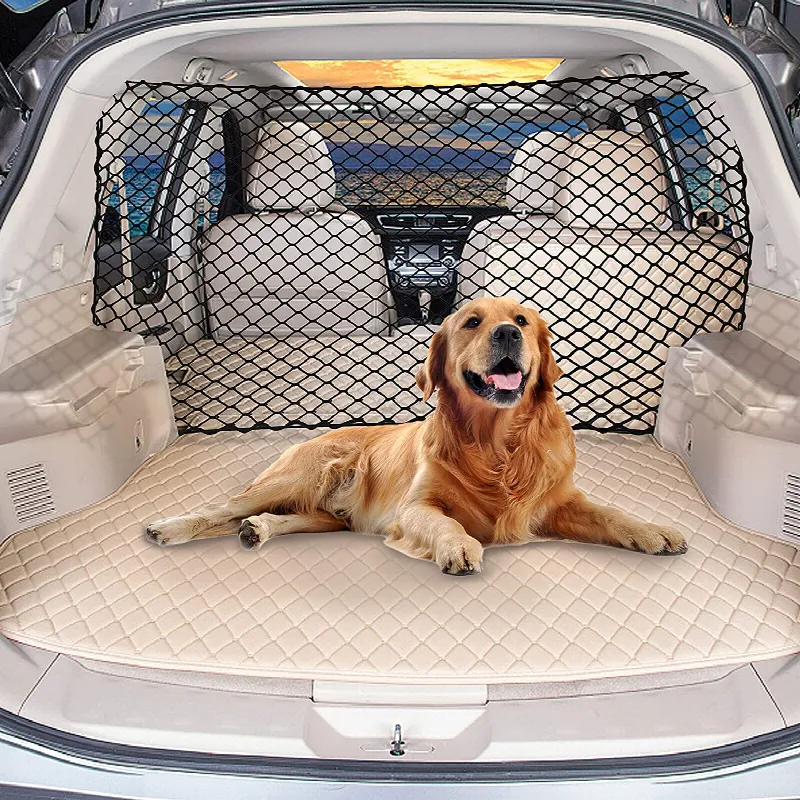
A rear-seat barrier can add extra boundary control if your dog keeps trying to push forward or if you want a stronger visual divide in the cabin.
Add protection for fur, dirt, and muddy paws
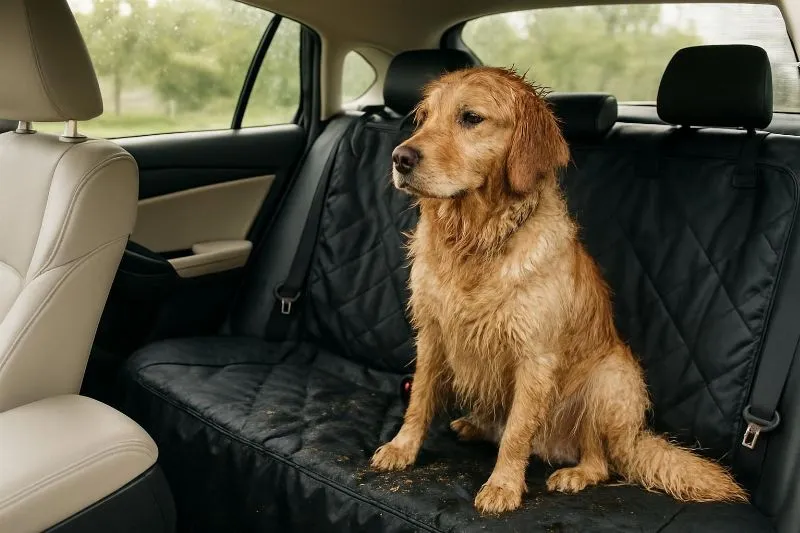
If your dog comes home wet, sandy, or muddy, a seat cover under or alongside the tent can make cleanup much easier. Look for a cover that lays flat and stays in place under the pet area without blocking belt buckles or creating a slip hazard.
For dogs that shed a lot or like to spin before lying down, a durable pet mat can help protect the seat surface and make the rear area easier to wipe clean. The key is simple coverage that supports the tent instead of fighting it.
Make sure any added layer still allows the tent to fit securely. Too many loose pieces can bunch up, slide, or make the back seat less stable for your dog.
- Choose a layer that stays flat under pressure
- Keep access to buckles and seat belts open
- Avoid bulky add-ons that create bunching
- Use washable materials when possible
Train the habit so the front seat stays off-limits
A tent helps with boundaries, but your dog still needs a clear routine. Start by loading your dog into the back seat every time, using the same door and the same cue word. Consistency matters more than a long explanation your dog cannot understand.
Reward calm behavior in the back seat before the car moves. If your dog stands up or leans forward, pause the routine and reset calmly. Do not let the front seat become a place your dog can reach, even once, or the habit may come right back.
For nervous or highly excited dogs, shorter practice rides can help. Keep the first few trips simple, then gradually increase ride time as your dog learns where to settle. If you are traveling with kids or pets, use the right restraint for each one and keep everyone in a proper seating area.
- Use the same loading routine every trip
- Reward calm behavior before driving
- Do not let the front seat become a reward
- Build up ride time gradually
When a barrier or cover helps more than a tent
A dog backseat tent is a strong choice when you want a clearly defined pet zone, but some vehicles or dogs do better with a different setup. If your dog is very large, very energetic, or prone to pacing, a rear-seat barrier may add an extra layer of control.
If your main issue is dirt, water, or fur rather than front-seat climbing, a rear seat cover alone may be enough. Choose the simplest setup that solves the actual problem without blocking seat belts, buckles, or the driver’s view.
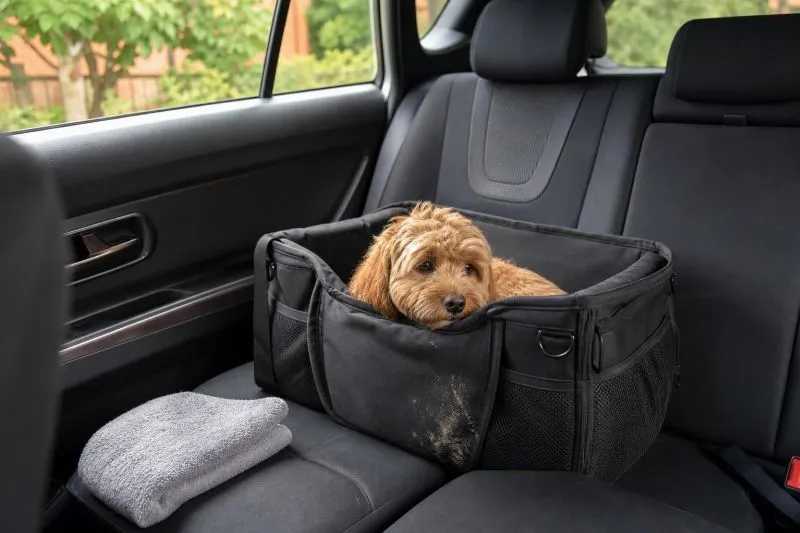
The best choice is the one that fits your car, your dog, and your daily routine. If the back seat is crowded, a carrier or another approved restraint may be the more practical answer for shorter rides.
- Use a barrier when boundary control is the main issue
- Use a cover when cleanup is the main issue
- Keep safety hardware accessible at all times
- Match the setup to your dog’s size and behavior
The bottom line
If your dog keeps climbing toward the front seat, start by defining the back seat and making that area easier to understand. A dog backseat tent can do that while helping protect your upholstery and reduce driver distraction. Measure first, install it securely, and pair it with the right restraint so every ride is calmer and safer.
Gear that helps
Picked from our shop for this problem. Free tracked shipping to all 50 states, and save up to 10% when you buy 2 or more.
This is the main solution for creating a defined rear-seat space that helps keep an excited dog out of the front seat while protecting the upholstery.
A rear-seat barrier can add extra boundary control if your dog keeps trying to push forward or if you want a stronger visual divide in the cabin.
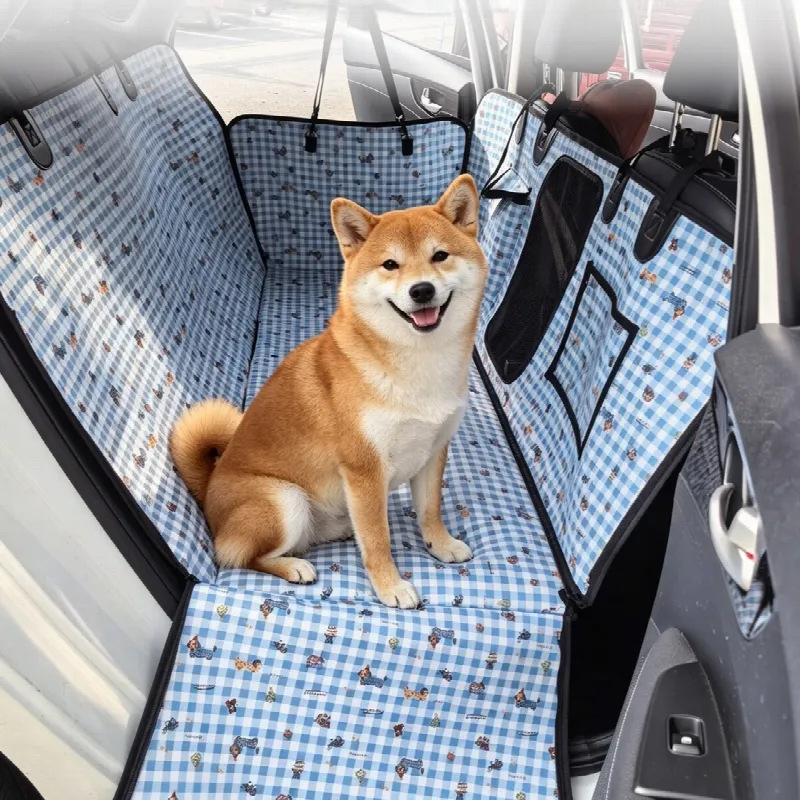
This helps protect the seat from fur, dirt, and paw marks while giving the tent a more stable base to sit on.
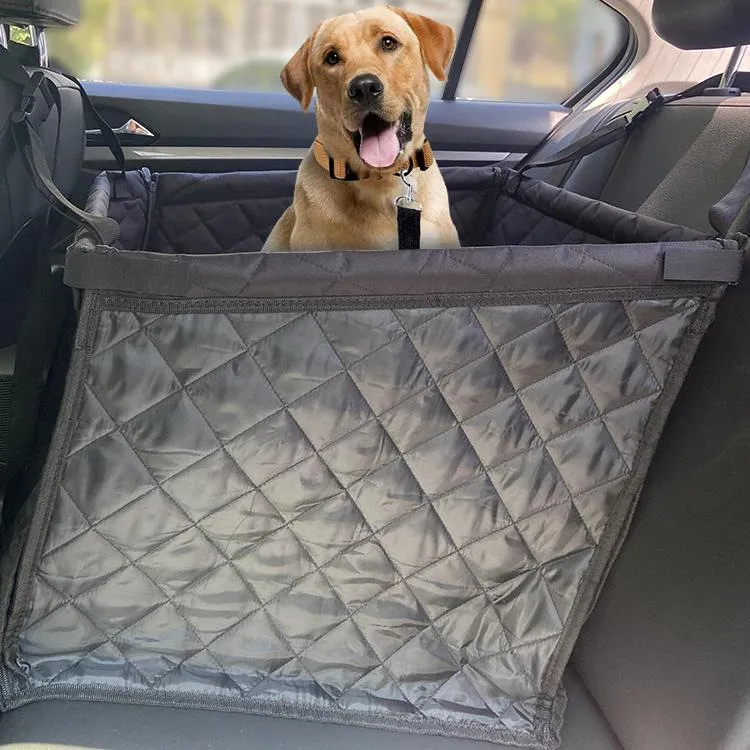
If you want a more protective pet area for longer rides, this mat adds coverage and helps keep the back seat easier to clean.
Questions people ask
Will a dog backseat tent stop my dog from jumping into the front seat?
It can help a lot by creating a clear boundary, but it works best when installed tightly and used with consistent training. If your dog is very determined, a rear-seat barrier or a proper restraint may also be needed.
Can I still use a seat belt with a dog backseat tent?
Often yes, but check the design first. Make sure the seat belt buckle remains reachable and the belt path stays clear. For dogs, use a proper harness or carrier when needed, and never block safety equipment.
What should I measure before buying one?
Measure the width and depth of your back seat, plus any headroom needed for side panels or support pieces. Also check buckle access, rear vents, and whether the setup fits without folding or sliding.
Is a seat cover enough by itself?
A seat cover helps with cleanup, but it does not always create a strong boundary. If the main problem is your dog climbing forward, a tent or barrier usually does a better job of defining the back seat.