Flat Tire Roadside Kit: What to Keep in Your Car
The short answer
- Keep safety gear, basic tools, and a way to check and restore tire pressure.
- A portable electric tire inflator can get you back to safe pressure faster than waiting for help.
- Store everything in one place so you can reach it quickly on the shoulder.
- Check your tire size, jack points, and spare tire condition before you need them.
A flat tire can turn into a longer delay if you do not have the right gear in the car. The goal is not to fix every tire problem yourself. The goal is to stay safe, save time, and handle the common situations that can happen on the road.
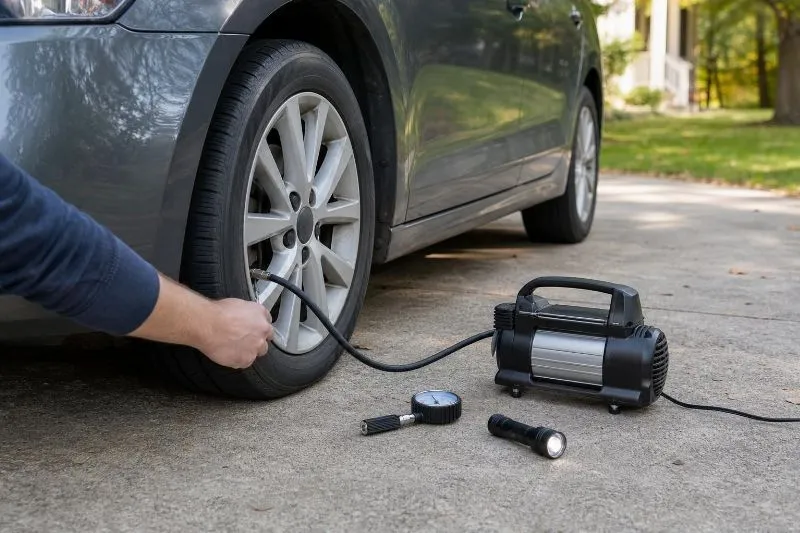
A good flat tire roadside kit should cover three things: warning other drivers, checking the tire, and making the tire usable enough to reach help. A portable electric tire inflator belongs in that kit because it can quickly top off low pressure after a slow leak or temporary repair.
What should be in a flat tire roadside kit?
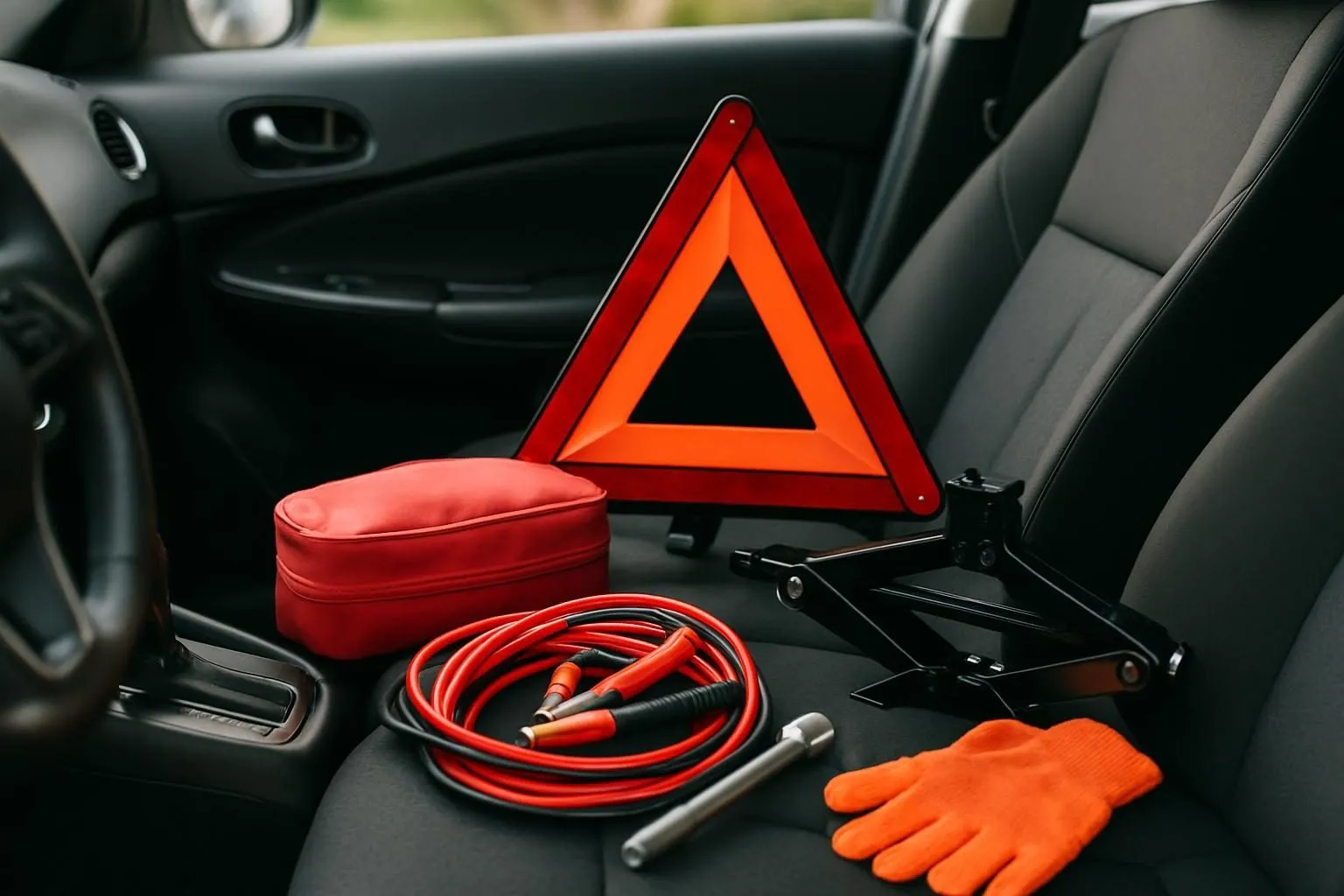
Start with the basics that help you stay visible and work safely near traffic. You want items that help you warn other drivers, inspect the tire, and make a temporary fix if the tire is still intact enough to inflate.
Do not build the kit around one single tool. A flat tire can mean low pressure, a puncture that can be temporarily sealed, or a complete blowout that needs a spare tire or roadside help. Your kit should support all three situations as much as possible.
- Reflective warning triangles or road flares
- Work gloves
- Flashlight with extra batteries
- Tire pressure gauge
- Owner’s manual or notes on jack points
- Small towel or kneeling pad
Why a portable tire inflator matters
A portable electric tire inflator is one of the most useful tools to keep in the trunk. It can restore pressure after you add air to a tire that is only low, and it can help after a temporary sealant or plug when the tire still holds air.
This matters because a tire that looks fine may still be underinflated enough to drive poorly or wear out quickly. The right inflator lets you set the pressure more accurately than guessing at a gas station air pump, especially if you are on a dark shoulder or in bad weather.
- Checks and fills pressure without waiting for help
- Useful for slow leaks and low-pressure warnings
- Helps you reach a repair shop safely
- Saves time when you need a quick pressure correction
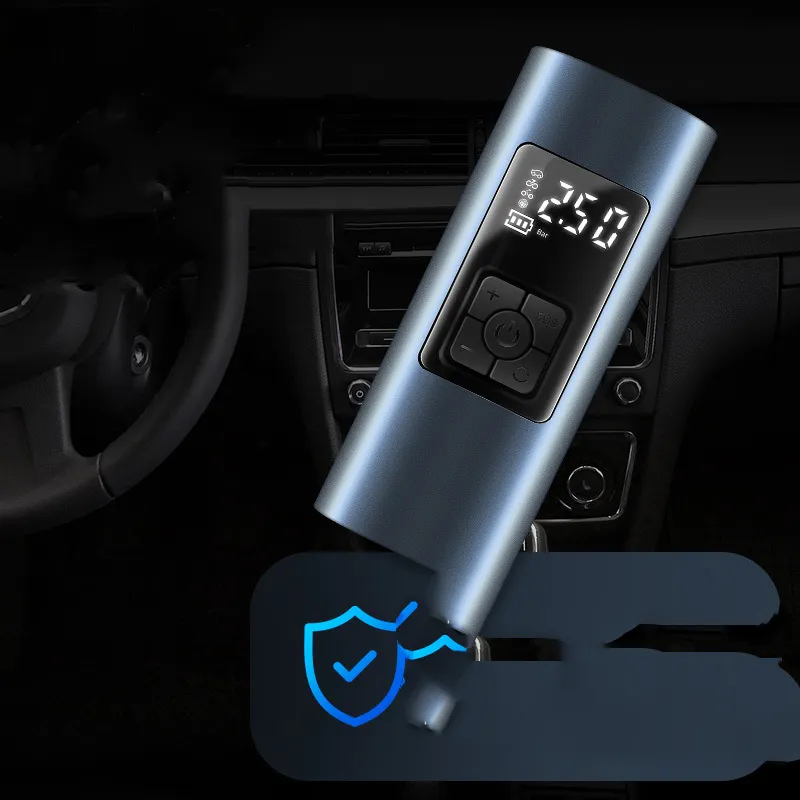
This is the most useful add-on for a flat tire kit because it lets you quickly restore tire pressure after a slow leak or temporary repair. It helps you reach a shop safely without waiting for a pump.
What tire tools and safety items do you need?
A kit should include more than just air. You need the tools to assess the tire and the gear to stay safe while you do it. If you carry a spare tire, make sure you also have the tools to install it and the confidence to use them safely.
If you are not sure where to place a jack, how to loosen lug nuts, or whether your spare is fully inflated, check your vehicle manual now instead of on the roadside. That is also the place to confirm jack points and tire pressure specifications.
- Tire pressure gauge
- Lug wrench if your car does not already have one
- Jack and spare tire, if equipped
- Valve stem caps
- Pen or marker to note tire position if needed
- Basic first aid kit
How do you store the kit so you can reach it fast?
A roadside kit only helps if you can grab it quickly. Put the most important items together in one bin or bag so they do not slide around under groceries or luggage. Keep the inflator, gauge, gloves, and triangles in the same place.
Use the trunk or cargo area, not the glove box, for larger items. The goal is to open one storage container and find everything in seconds. That also makes it easier to check the kit every few months and replace anything missing.
- Keep the inflator where it is easy to reach
- Store gloves and flashlight on top
- Separate loose cords so they do not tangle
- Check batteries and power cables regularly
What should you do when you get a flat?
First, move to a safe place if the tire is still allowing you to drive. Turn on your hazard lights, set the parking brake, and avoid stopping on soft ground if you can help it. If traffic is heavy or the shoulder is narrow, staying in the car with your seat belt on may be safer until help arrives.
If you are changing the tire yourself, work only on level ground when possible and follow your vehicle manual. Do not crawl under a car supported only by a jack. If the tire is shredded, the wheel is damaged, or you are not comfortable with the repair, call roadside assistance or another qualified service.
- Pull over safely and turn on hazard lights
- Use warning triangles if you can set them out safely
- Check the tire for cuts, nails, or sidewall damage
- Inflate only if the tire can still hold air
- Replace the valve cap after adding air
What mistakes should you avoid in a tire emergency?
Do not keep driving on a tire that is completely flat. That can damage the wheel and make the situation worse. If the tire is losing air fast, your best move is usually to stop, get safe, and call for help.
Also avoid using a portable inflator on a tire with obvious sidewall damage or a large tear. An inflator can help restore pressure only when the tire is still structurally usable. If the tire will not hold air, the problem is bigger than a quick fill.
- Ignoring the tire pressure warning light
- Overinflating while rushing
- Using the jack on soft or uneven ground
- Forgetting to check the spare tire
- Leaving the kit empty after one use
How often should you check your roadside kit?
A flat tire roadside kit should be checked a few times a year, and especially before long trips. Make sure the inflator powers on, the gauge reads correctly, and any batteries still work. Confirm that your spare tire, if you have one, is properly inflated.
Also look at the storage setup itself. If the kit is scattered across the trunk, it will take longer to use when you need it. A simple organized bin keeps everything together and makes it easier to spot missing items before a trip.
- Test the inflator and flashlight
- Confirm spare tire pressure
- Replace missing gloves or tools
- Check expiration dates on first aid items
- Tidy the kit after each use
The bottom line
The simplest way to prepare for a flat tire is to keep one organized kit in the car and know where everything is. Start with safety gear, a tire gauge, and the tools for your spare, then add a portable electric tire inflator so you can restore pressure fast when the tire still has life left in it.
Gear that helps
Picked from our shop for this problem. Free tracked shipping to all 50 states, and save up to 10% when you buy 2 or more.
This is the most useful add-on for a flat tire kit because it lets you quickly restore tire pressure after a slow leak or temporary repair. It helps you reach a shop safely without waiting for a pump.
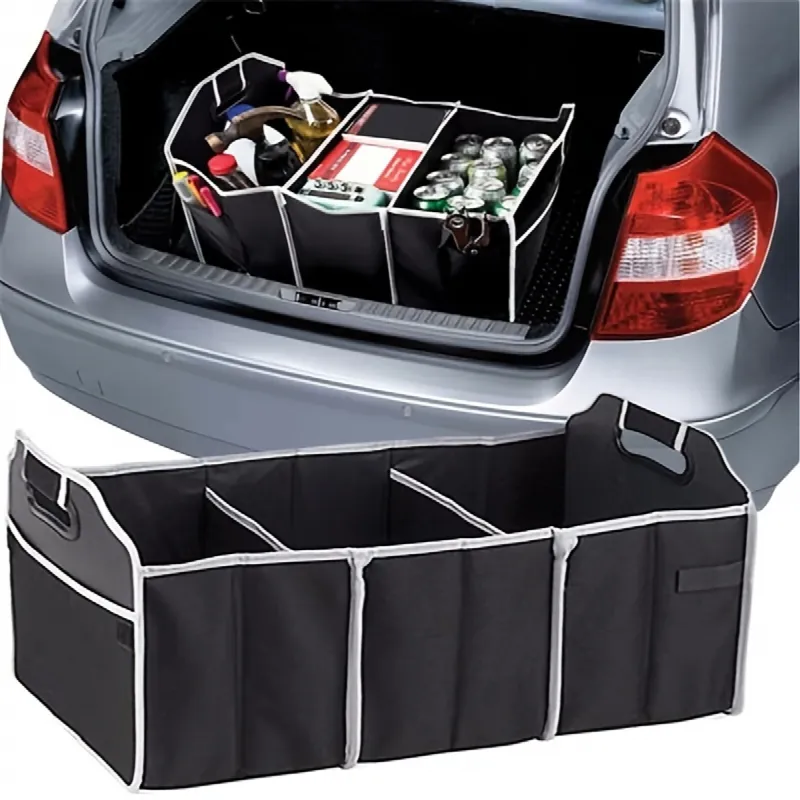
A trunk organizer keeps the inflator, gauge, gloves, and warning items together so they are easy to find during an emergency. It also helps prevent loose tools from sliding around in the cargo area.
Questions people ask
Can a portable tire inflator fix a flat tire?
No. It can add air to a tire that is low or help after a temporary seal, but it cannot repair major punctures, sidewall damage, or a tire that will not hold air.
Do I need a spare tire in my roadside kit?
If your vehicle has a spare, keep it inflated and include the tools needed to install it. If you do not have a spare, your kit should focus more on visibility, pressure checks, and calling for help.
How much air should I put in a tire after a leak?
Use the pressure listed on the door placard or in your owner’s manual, not the number on the tire sidewall. Check your state's rules if you are unsure about roadside repairs or equipment requirements.
What is the most important item besides the inflator?
A tire pressure gauge. It tells you whether the tire is actually at the right pressure instead of relying on guesswork, and it helps you avoid underinflating or overinflating the tire.