Portable Car Air Compressor: How to Fill a Low Tire
The short answer
- Check tire pressure when the tires are cold for the most accurate reading.
- Top off a soft tire as soon as possible instead of driving on it for days.
- Use the pressure listed on the driver’s door placard, not the tire sidewall.
- Stop and get help if the tire is damaged, losing air quickly, or won’t hold pressure.
A tire that looks only a little soft can still affect handling, braking, and fuel use. The good news is that many low tires can be topped off at home before they turn into a roadside headache.
A portable car air compressor gives you a simple way to add air when a tire is low. The key is knowing how to check pressure, set the right target, and decide when the tire needs more than air.
How do you know a tire is low?
Start with a quick visual check, but do not rely on appearance alone. A tire can lose enough air to matter before it looks flat, especially in cooler weather.
Use a tire pressure gauge to check all four tires, plus the spare if your vehicle has one. The most accurate reading comes before driving or after the car has sat for a few hours. If you just drove, the tire can read slightly higher because it warmed up.
- Check the pressure label on the driver’s door jamb or door edge.
- Compare each tire to the recommended psi on that label.
- Look for nails, screws, cuts, bulges, or sidewall damage.
- If one tire is much lower than the others, suspect a leak.
What should you use to inflate it at home?
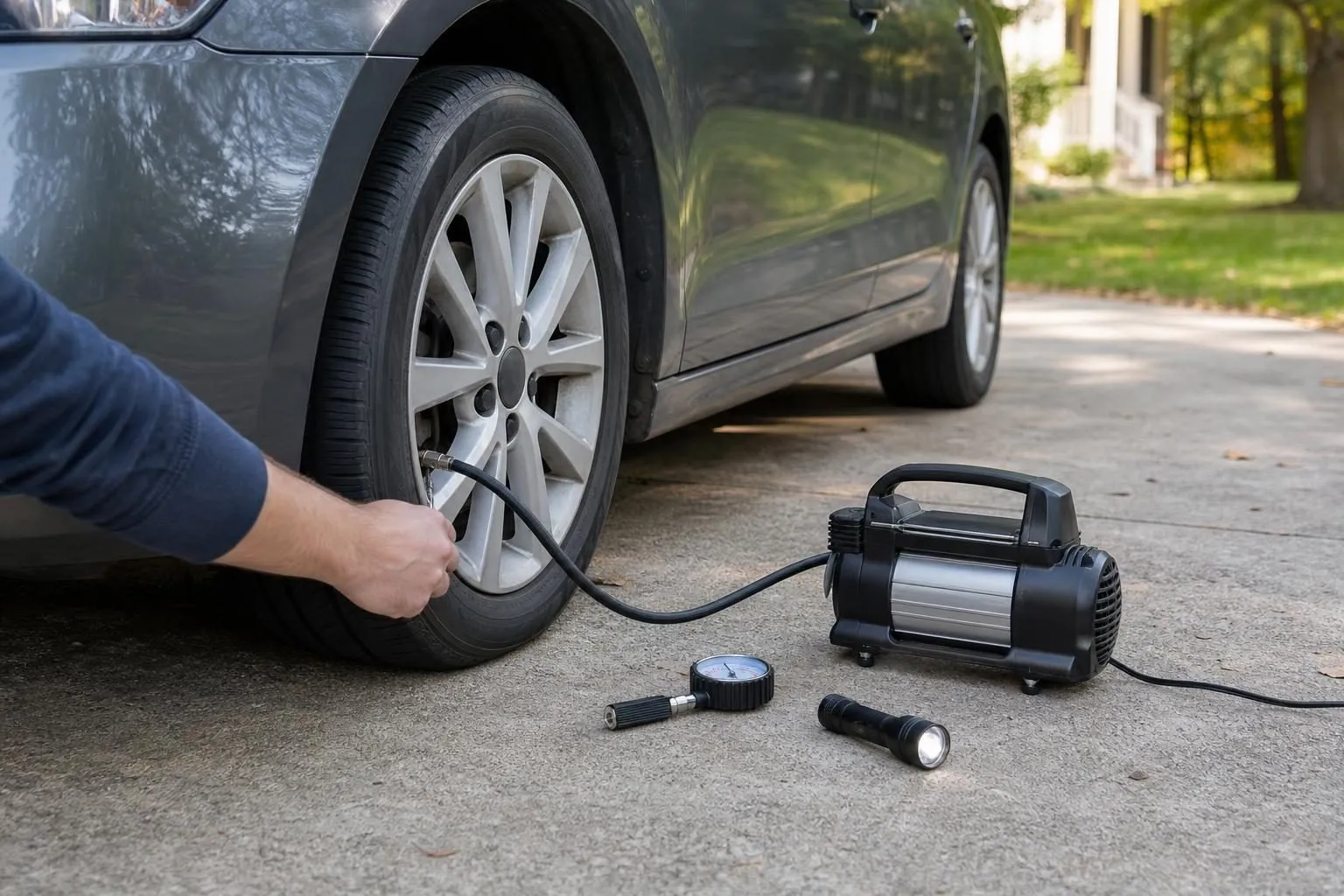
A portable car air compressor is the simplest tool for topping off a tire in your driveway or garage. Look for one that plugs into your vehicle’s power outlet or another power source you already have available, and make sure it can reach all four tires without stretching the hose too far.
Before buying or using one, check that it has a clear pressure display, an easy way to set your target psi, and a hose that locks securely onto the valve stem. A built-in light can also help if you need to fill a tire before sunrise or after dark.
- Make sure the display is easy to read in daylight.
- Check that the power cord reaches every tire.
- Confirm it fits standard tire valve stems.
- Keep the compressor and gauge in the car, not buried in the trunk.
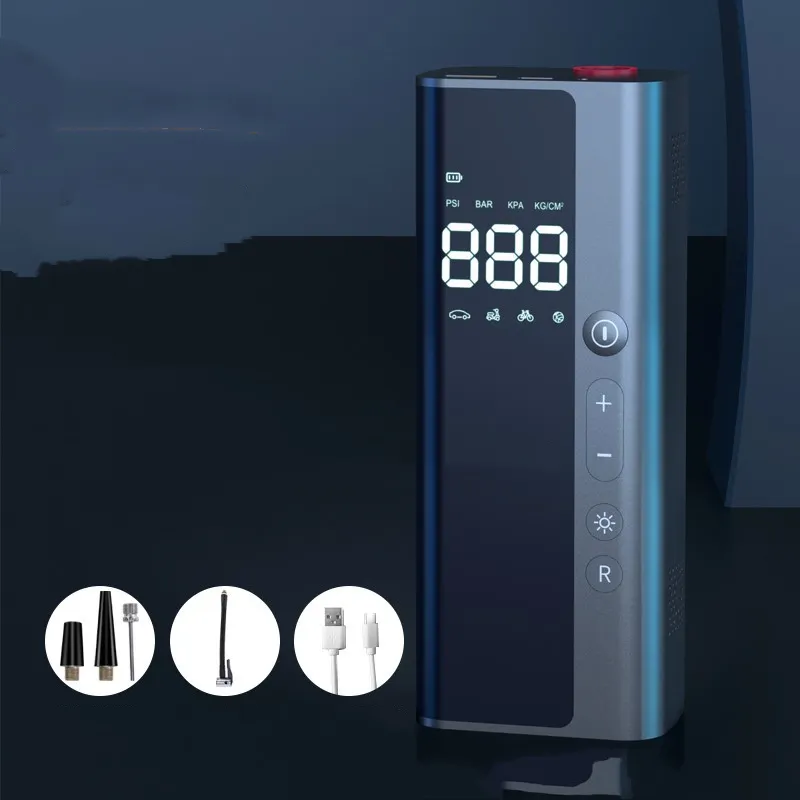
A straightforward option for topping off a soft tire at home or in the driveway. It gives you a dedicated tool for quick inflation before a low tire becomes a bigger problem.
How to top off a low tire step by step
Park on level ground and set the parking brake. If possible, move away from traffic and turn on your hazard lights. Remove the valve cap from the tire, then attach the compressor nozzle firmly so air does not leak out while filling.
Set the target pressure to the number on the vehicle placard, not the number molded into the tire sidewall. Add air in short bursts if your compressor does not have an auto-stop setting. Check the pressure again after filling, because a tire can rise quickly near the end. Replace the valve cap when you are done.
- Do not overinflate; it can make the ride rough and reduce traction.
- If the tire is very low, add air in short steps and recheck often.
- Keep hands clear of moving parts and hot brake areas.
- If the compressor gets hot, pause and let it cool.
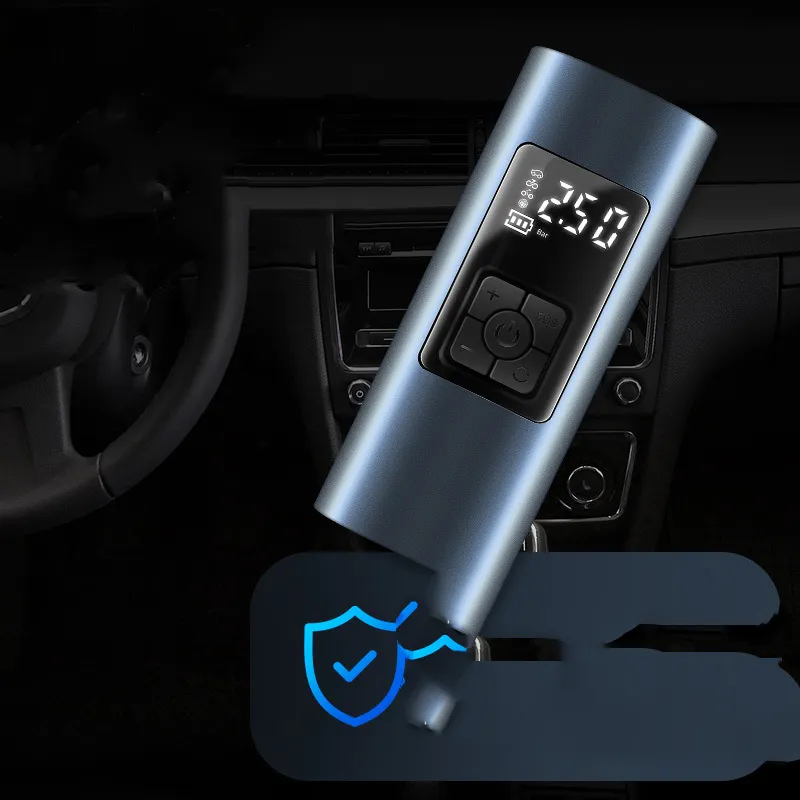
Useful if you want a compact inflator with simple controls for setting a target pressure. It helps make small pressure corrections without relying on a gas station air pump.
How long can you drive on a low tire?
The short answer is: not long. A tire that is only a little low may get you home or to a nearby air source, but you should not treat it like a normal tire for everyday driving. Low pressure can overheat the tire, wear it unevenly, and make the car feel less stable.
If the tire is visibly soft, the steering feels odd, or the pressure warning light comes on, plan to stop and fill it as soon as you can. Do not drive long distances, at highway speed, or with a tire that is nearly flat. If the sidewall is damaged or the tire keeps losing air, use a spare if you have one or call for help.
- Drive only as far as needed to reach air or repair.
- Avoid hard cornering and sudden braking.
- Do not keep topping off a tire that won’t hold pressure.
- Check the tire again after a short drive.
What mistakes should you avoid?
The most common mistake is using the number printed on the tire sidewall as the target pressure. That number is a maximum, not the recommended pressure for your vehicle. Always use the placard on the vehicle instead.
Another mistake is filling the tire by feel. A tire can still be underinflated even if it looks round. It is also risky to ignore a slow leak, because you may end up with a tire that drops again overnight or on the road.
- Do not inflate to the tire sidewall number unless your vehicle label matches it.
- Do not skip the pressure check after filling.
- Do not ignore vibration, pulling, or a tire that keeps going soft.
- Do not drive on a tire with a bulge, cut, or exposed cord.
What to keep with your compressor
A small tire kit makes the job easier when pressure drops at the worst time. A flashlight helps you see the valve stem and pressure display clearly if the light is poor. A basic first aid kit is also smart to keep in the car for any roadside stop.
If you travel with children or pets, make sure they are properly restrained before you handle tire checks or repairs. Kids need the right car seat, and pets should be in a crash-tested harness or carrier. Never leave them loose in the car while you work near traffic.
- Portable compressor
- Tire pressure gauge
- Flashlight
- Basic first aid kit
The bottom line
The simplest fix for a low tire is to check the pressure, top it off to the vehicle’s recommended psi, and inspect for damage right away. Keep a portable car air compressor and gauge in the car so a soft tire stays a quick chore instead of a roadside problem.
Gear that helps
Picked from our shop for this problem. Free tracked shipping to all 50 states, and save up to 10% when you buy 2 or more.
A straightforward option for topping off a soft tire at home or in the driveway. It gives you a dedicated tool for quick inflation before a low tire becomes a bigger problem.
Useful if you want a compact inflator with simple controls for setting a target pressure. It helps make small pressure corrections without relying on a gas station air pump.
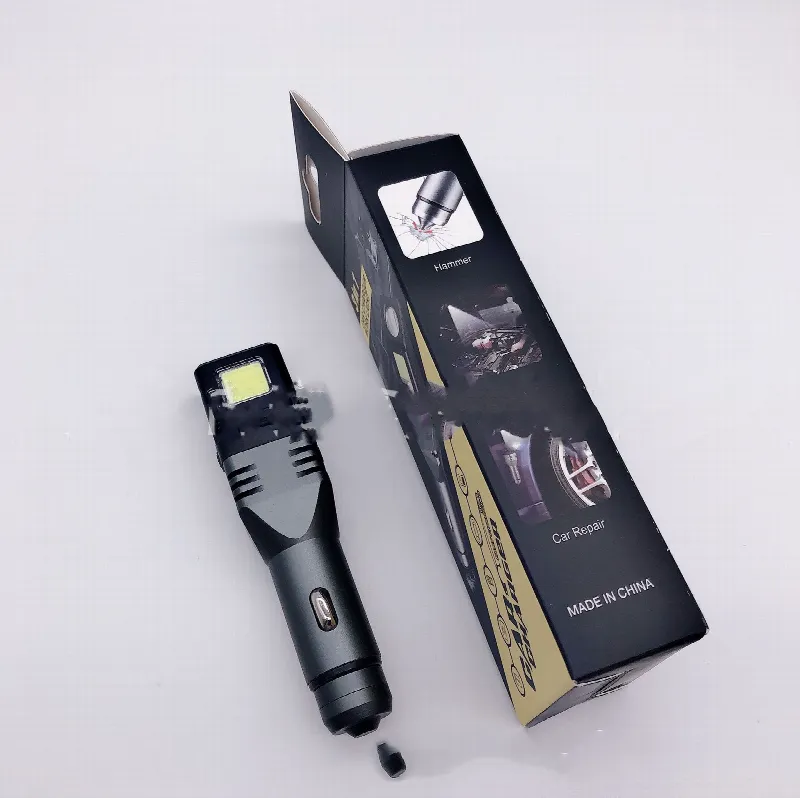
A bright flashlight makes nighttime tire checks and valve-stem work easier and safer. It is especially helpful if you need to inspect a tire after dark or in a dim garage.
Questions people ask
How do I know the right tire pressure for my car?
Look at the tire pressure placard on the driver’s door jamb or door edge. That label lists the recommended pressure for your vehicle. Do not use the number on the tire sidewall as your target.
Can I use a portable car air compressor on a completely flat tire?
Sometimes, but if the tire is fully flat, damaged, or won’t start holding air, it may have a puncture or bead problem. Inflate only if it will take air safely, then inspect the tire closely or get professional help.
Should I check tire pressure when the tire is hot or cold?
Cold is best. Check tires before driving or after the car has sat for a few hours. Heat from driving can raise the reading and make it less accurate.
What if the tire keeps losing air after I fill it?
That usually points to a puncture, valve issue, or bead leak. Recheck the pressure after a short drive or later the same day. If it drops again, have the tire inspected as soon as possible.