Check Car Drain Clog: How to Inspect Hoses at Home
The short answer
- Start with the likely drain path, then look for standing water, debris, or crushed hose sections.
- Use a flexible inspection camera instead of wire or metal tools that can damage plastic lines.
- Check both the inlet and outlet ends when you can, since clogs often sit away from the visible opening.
- If you find soaked carpet, repeated backups, or a disconnected hose, stop and fix the cause before more water enters the car.
A slow drain or clogged hose can cause water leaks, musty smells, fogged windows, or wet carpet. The good news is that you can often spot the problem at home before it gets worse.
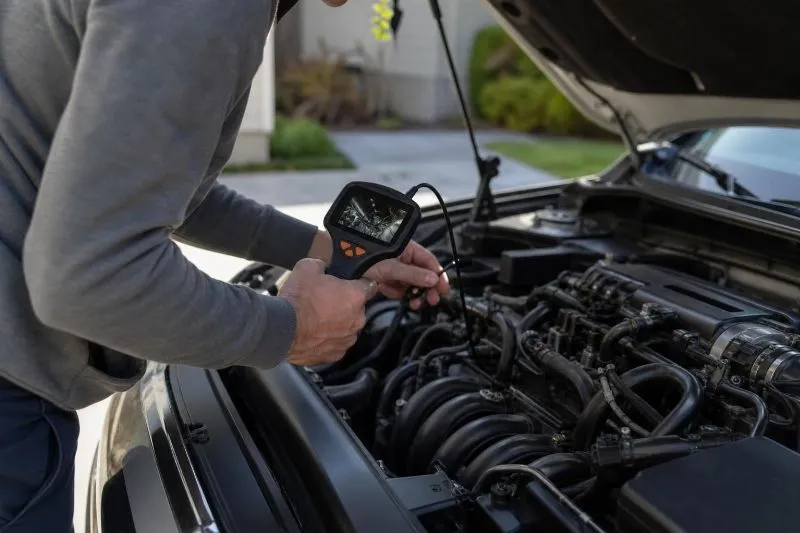
A WiFi endoscope camera makes the job much easier because you can look inside drain channels and hose runs without tearing the car apart. The key is knowing where to look, how to feed the camera safely, and what signs point to a clog.
What you need before you start
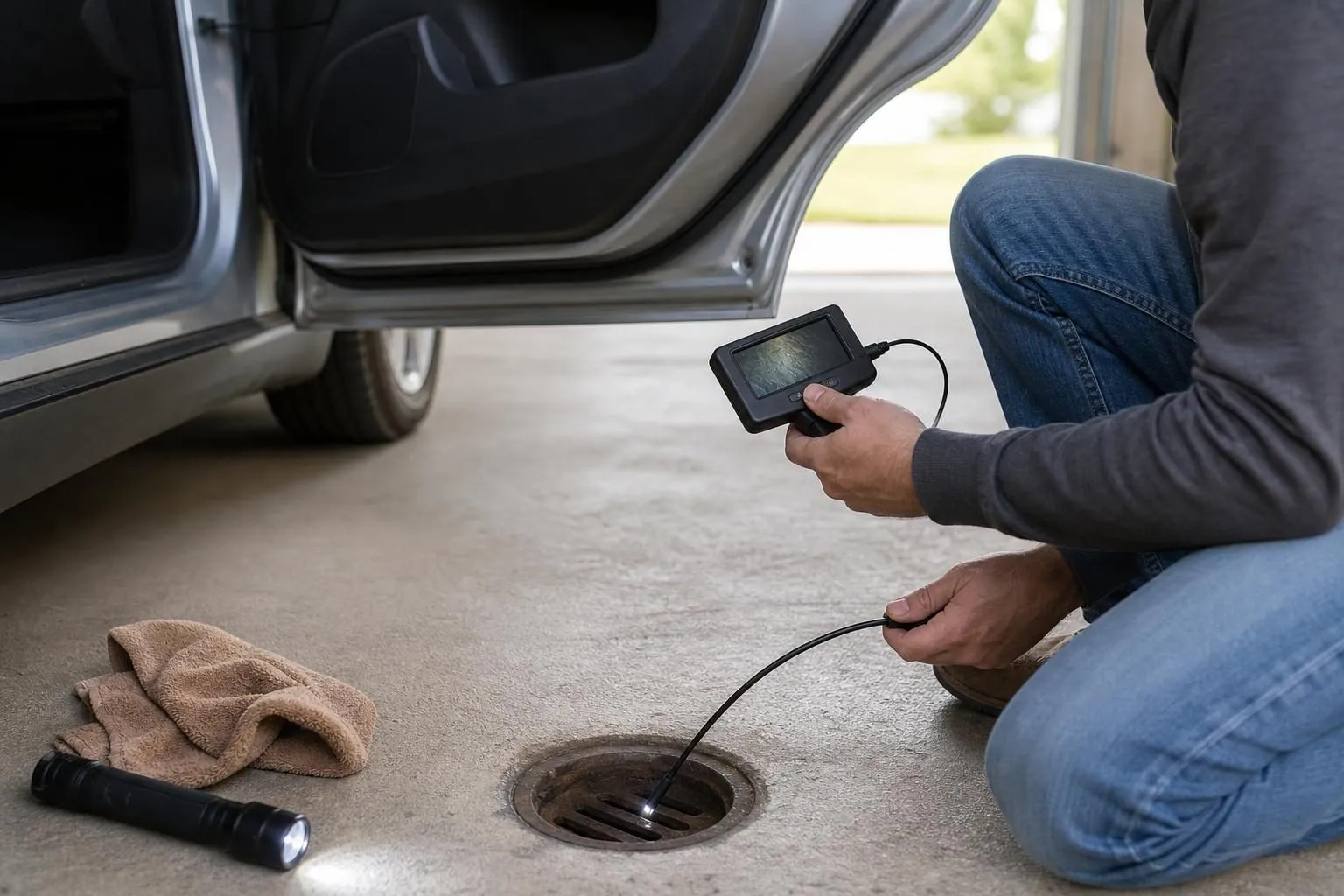
For this job, you want a small inspection camera, a charged phone or tablet if the camera connects wirelessly, a flashlight, and a towel or paper towels. If the area is dirty, clean the outside first so loose grit does not get pushed into the drain.
Keep the car parked on level ground and switch it off. If you are checking a drain near the interior, move floor mats and any cargo out of the way so you can see leaks or wet spots clearly.
- Inspection camera or WiFi endoscope
- Flashlight
- Towels or paper towels
- Gloves if the area is dirty
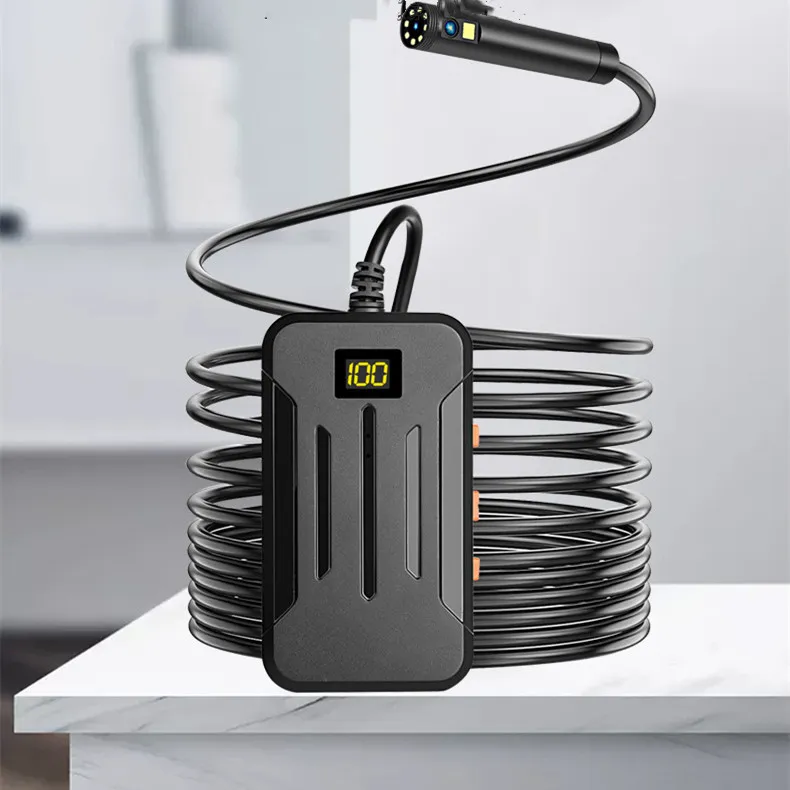
A wireless endoscope helps you look deep into drain channels and hose runs while keeping your phone or tablet nearby as a live screen. That makes it easier to spot debris, standing water, or a loose connection without guessing.
How to find the drain or hose path
Start by identifying the area that is acting up. Common problem spots include sunroof drains, door drains, HVAC condensate drains, windshield cowl drains, and washer hose runs. Follow the visible channel or hose path as far as you can before using the camera.
If you are not sure where the blockage is, look for the low point where water should exit. That is often the best place to inspect first. The goal is to trace the path from one opening to the next without forcing anything into the line.
- Look for wet carpet, drips, or pooled water
- Trace the hose from the opening to the outlet
- Check for pinched bends near trim panels
- Use the flashlight to find access points
How to use the camera without damaging anything
Feed the camera slowly into the opening. Stop if you feel resistance. A drain line may bend sharply, but it should not require force. Twisting gently can help the tip turn through corners, but do not push hard enough to kink the hose.
Watch the screen for standing water, mud, leaves, sand, insulation, or a collapsed section of hose. If the camera has a dual lens or adjustable view, use it to check the walls of the channel as well as the center. That helps you spot cracks, disconnections, or heavy buildup before you try to clear anything.
- Advance in small steps
- Stop if the probe binds
- Look for debris, sludge, or crushed hose sections
- Check both the center and the side walls of the line
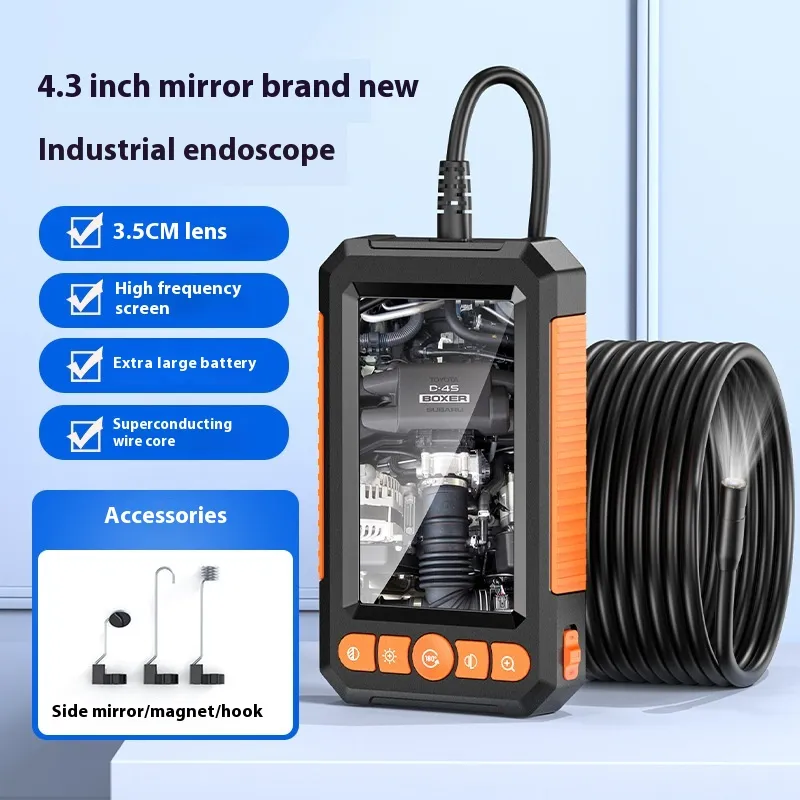
This inspection camera with a built-in screen is useful when you want a self-contained setup without relying on a separate device. It is a practical option for checking tight drain paths and hose bends at home.
What a clog usually looks like on camera
A real blockage often shows up as a narrow passage, pooled water, or material packed against one side of the tube. You may also see a hose that has slipped off a fitting, which can look like an open gap or a sudden break in the path.
If the line is clear, you should see an open, consistent channel with only a thin film of moisture. If you see heavy buildup, do not keep shoving the camera deeper. Mark the spot and plan the safest way to clear it from the nearest access point.
- Packed leaves or dirt
- Standing water that should have drained
- A hose pulled loose from a fitting
- Flattened or sharply bent hose sections
How to clear it safely after you spot the problem
If the clog is light and close to an accessible opening, you may be able to remove loose debris by hand from the outside end. For a hose, use gentle air or a soft rinse only if the line is meant to drain that way and you can confirm the outlet is open. Do not use wire, coat hangers, or hard tools inside a plastic hose.
If the line appears blocked deeper inside, or the hose is cracked, stuck, or disconnected, it is better to stop and repair the cause first. Forcing water through a damaged line can send moisture into the cabin or onto electrical parts.
- Do not use metal tools inside plastic drains
- Use gentle methods only when the outlet is clear
- Replace cracked or split hoses
- Stop if water is heading into the cabin
When to recheck and when to get help
After clearing or repairing the line, run a small amount of water through the drain only if that makes sense for the part you are checking. Watch where it exits and look for leaks inside the car. Recheck with the camera if the flow still seems slow.
Get help if you cannot find the outlet, the hose disappears behind trim you cannot safely remove, or the drain keeps clogging again. Repeated blockages can point to a hidden pinch point, a loose connection, or debris that was never fully removed.
- Recheck flow after cleaning
- Look for new leaks or damp carpet
- Ask for help if trim removal gets complicated
- Investigate repeat clogs instead of ignoring them
The bottom line
A WiFi endoscope camera lets you check a car drain clog before it turns into a bigger mess. Start with the likely drain path, inspect slowly, and avoid forcing tools into the hose. If you want a clearer look inside tight channels, a handheld inspection camera is the best next step.
Gear that helps
Picked from our shop for this problem. Free tracked shipping to all 50 states, and save up to 10% when you buy 2 or more.
A wireless endoscope helps you look deep into drain channels and hose runs while keeping your phone or tablet nearby as a live screen. That makes it easier to spot debris, standing water, or a loose connection without guessing.
This inspection camera with a built-in screen is useful when you want a self-contained setup without relying on a separate device. It is a practical option for checking tight drain paths and hose bends at home.
Questions people ask
Can I check a car drain clog without taking the car apart?
Often, yes. Many drain paths have an opening or outlet you can reach with a flexible inspection camera. You may still need to remove a trim panel or panel edge for access, but you usually do not need major disassembly to get started.
What should I do if the camera gets stuck?
Stop right away. Pull back slowly and do not force the probe through a tight bend. If it keeps binding, try another access point or look for a damaged section of hose instead of pushing harder.
How do I know if the drain is actually clogged?
Signs include standing water, slow drainage, wet carpet, or debris packed inside the channel. On camera, a clog often looks like a narrowed opening, pooled water, or material blocking the line.
Is it safe to flush the drain with water?
Only if you know the drain is meant to flow that way and you have confirmed the outlet is open. Use a small amount first. If water backs up into the cabin or the line looks damaged, stop and fix the problem instead.