How to Find Engine Leaks with an Inspection Camera
The short answer
- Use an inspection camera when your eyes cannot reach behind hoses, brackets, or panels.
- Check the engine only when it is cool, parked, and safely secured.
- Look for wet spots, cracks, loose clamps, debris, and damaged wiring.
- Choose a camera with a screen if you want a simple, direct view without relying on your phone.
Tight engine spaces are hard to inspect with a flashlight alone. Hoses, drains, and small leaks often hide behind parts you cannot easily move, and guessing can waste time or lead you to miss the real problem.
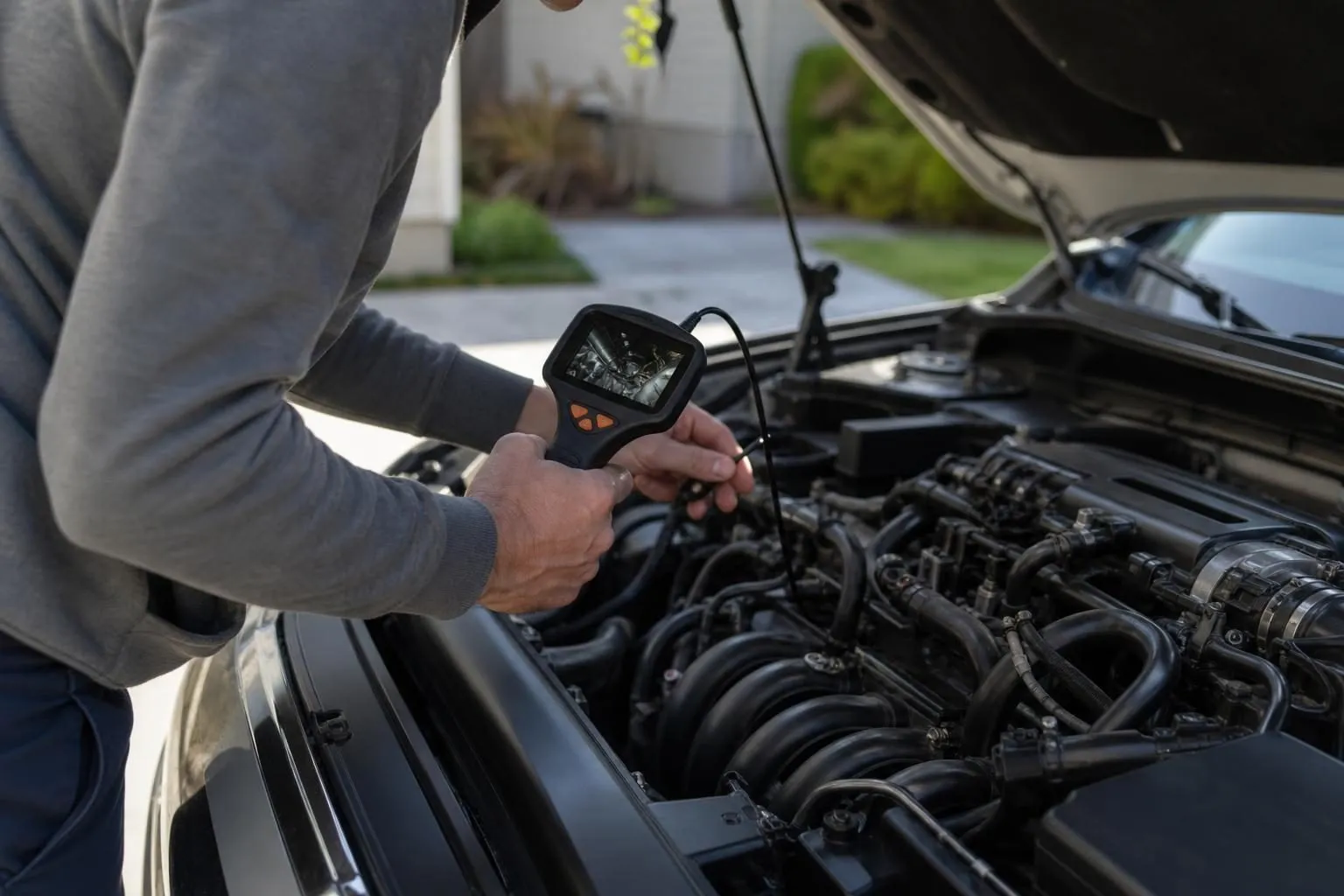
A screen-equipped inspection camera gives you a direct look into those hard-to-reach areas. Used the right way, it can help you spot cracks, wetness, buildup, and blockages without disturbing parts you should leave alone.
When does an inspection camera make sense?
A screen-equipped inspection camera is most useful when the problem is hidden behind other parts and you need a closer look before deciding what to remove or replace. It is a practical tool for checking hose routing, finding wet spots, looking into drains, and spotting debris in narrow gaps.
If you can already see the issue clearly with a flashlight and your hand, you may not need one. But if you are reaching blindly around the engine bay, a camera helps you inspect hard to reach spots without pulling apart more than necessary.
- Good for hidden leaks and damp areas
- Useful for narrow gaps near hoses and brackets
- Helpful for drains, seams, and lower engine areas
- Less useful when the problem is already visible
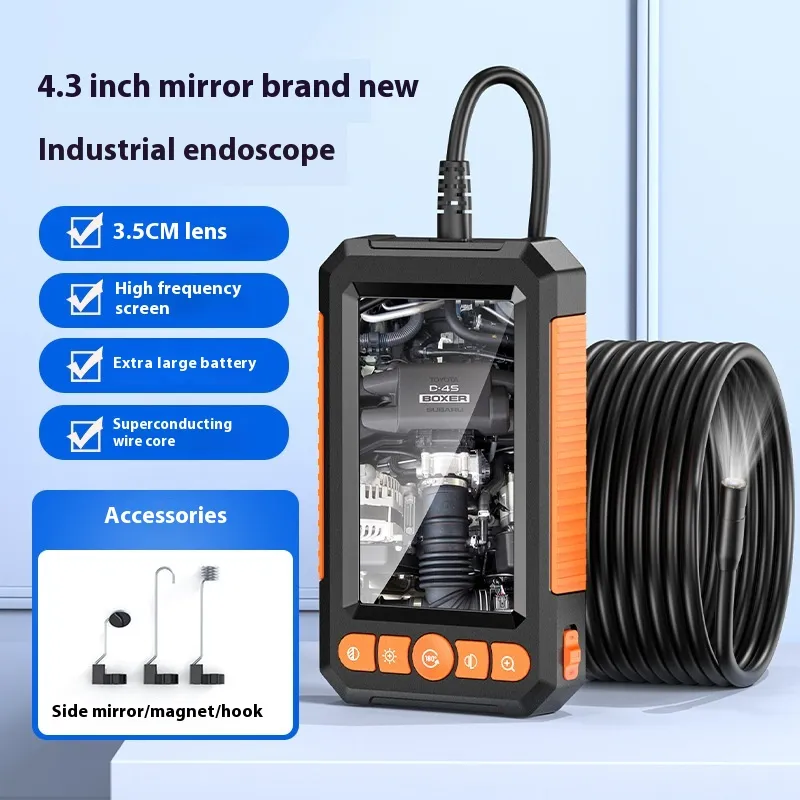
This is the best fit if you want a direct screen view for checking hoses, drains, and hidden leaks without relying on a phone connection.
What should you check before you start?
Before using any inspection camera, park on level ground, shut the engine off, and let it cool. Hot parts can burn you, and moving parts can catch loose clothing, straps, or a cable. Keep hands, hair, and tools away from belts, fans, pulleys, and other moving components.
Open the hood fully and secure it. If you need light, add it from the outside with a flashlight rather than trying to hold everything at once. For safety, never poke the camera into an area where it could get snagged near moving parts or block anything important.
- Engine off and cool
- Parking brake set
- Loose clothing secured
- Hands clear of belts and fans
- Use light from a safe angle
How do you use the camera to spot a problem?
Start with a slow scan of the area you want to inspect. Move the camera a little at a time and watch for changes in texture, color, and shine. Wet spots often look darker or glossy, while dried residue can show as white, green, brown, or crusty buildup depending on the fluid and surface.
If you are checking hoses, look for cracks, swelling, rubbed spots, loose clamps, and any area that looks flattened or oily. If you are checking drains, look for leaves, dirt, mud, or anything blocking the path. Take your time and compare both sides of similar parts when possible.
- Scan slowly instead of sweeping fast
- Look for wetness, crust, cracks, and rubbing
- Check hose ends and clamp points first
- Compare left and right sides when the layout matches
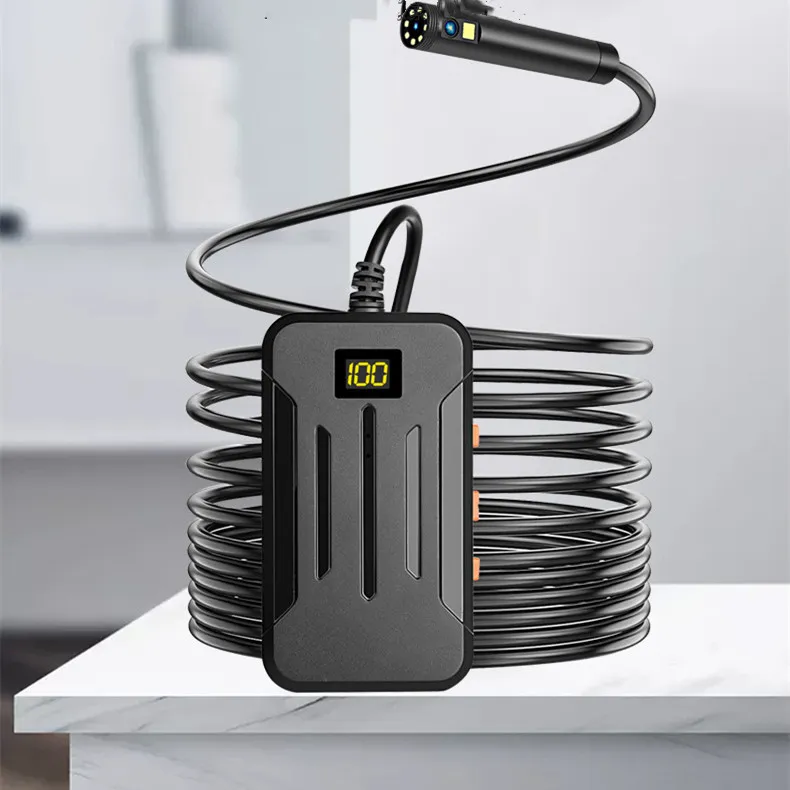
This option is useful if you want extra viewing flexibility for tight areas and may prefer connecting to a phone while inspecting hard-to-see spots.
Which engine spots are worth checking first?
Start with the areas that commonly hide small problems. Coolant hoses can seep at the ends and along bends. Washer or drain channels can clog with leaves and dirt. Seams around housings and covers can collect residue that shows where fluid is escaping.
You can also use the camera near the lower side of the engine bay, where drips often collect before they become obvious from above. If you smell something but cannot see it, inspect nearby joints and the surfaces below them. The goal is to trace the source, not just the drip location.
- Hose ends and bends
- Clamp locations
- Drain channels and gutters
- Seams under covers
- Lower surfaces where drips collect
What mistakes should you avoid?
Do not force the camera into a tight space. If it meets resistance, back out and change the angle. Pushing harder can snag the probe, damage nearby wiring, or make you miss the real issue by scraping away evidence.
Do not assume one damp spot tells the whole story. Fluids can travel along surfaces and drip away from the source. Trace upward and outward from the stain, and look for the highest point that still shows signs of wetness or residue. Also avoid touching hot parts, even briefly, just to feel for leaks.
- Do not force the probe
- Do not inspect near moving parts
- Do not confuse drip points with the source
- Do not touch hot components to confirm a leak
How can you tell whether the problem needs repair?
Some findings are simple cleanup; others need attention before they become bigger problems. Loose debris in a drain may just need clearing. A cracked hose, a wet clamp, or a repeated stain after cleaning usually points to a part that should be repaired or replaced.
If you find wiring damage, heavy corrosion, or fluid near belts and pulleys, stop and get the area checked. When in doubt, take clear photos from the camera screen so you can review what you saw or show a mechanic exactly where the issue is located.
- Clear debris may only need removal
- Cracked or swollen hoses need attention
- Repeated wetness suggests an active leak
- Damage near wiring or moving parts should be checked promptly
The bottom line
If you need to inspect hard to reach spots, start with a cool, parked vehicle and a careful look using a screen-equipped inspection camera. Work slowly, follow the wetness or residue to its source, and avoid forcing the probe into tight areas. That simple approach helps you find hidden problems sooner and makes repairs easier to plan.
Gear that helps
Picked from our shop for this problem. Free tracked shipping to all 50 states, and save up to 10% when you buy 2 or more.
This is the best fit if you want a direct screen view for checking hoses, drains, and hidden leaks without relying on a phone connection.
This option is useful if you want extra viewing flexibility for tight areas and may prefer connecting to a phone while inspecting hard-to-see spots.
Questions people ask
Is a screen-equipped inspection camera better than a flashlight?
For open areas, a flashlight is enough. A screen-equipped inspection camera helps when the problem is hidden behind hoses, covers, or brackets and you need a direct view into a narrow space.
Can I use it while the engine is running?
It is safer to inspect with the engine off unless you have a very specific reason and can keep clear of all moving parts. Never place your hands or the probe near belts, fans, or pulleys while anything is moving.
What should I look for first when checking for a leak?
Start with wetness, glossy residue, crusty buildup, and the highest point where signs of fluid appear. Leak fluid often travels downward, so the drip spot is not always the source.
Do I need a camera with my phone connection?
Not necessarily. If you want a simple, direct view without pairing a device, a camera with its own screen is often easier for quick checks. If you prefer saving images to review later, phone-connected options can also work.