Portable Camping Fan Lantern: How to Stay Cool Without Draining Power
The short answer
- Use a fan-lantern combo to reduce heat and provide light with one device.
- Place it for airflow, not pointed straight at your face all night.
- Check runtime, fan speeds, and charging options before you pack.
- Keep cords, straps, and hanging points clear of sleeping areas and gear.
Hot nights can make camping miserable, especially when your tent, car, or campsite holds heat after sunset. A portable camping fan lantern helps by giving you airflow and light without needing two separate devices.
The key is using it the right way: pick a model with enough runtime, place it where air can move through the space, and avoid wasting power on higher speeds than you need. Here’s how to stay cooler and more comfortable without draining your setup.
Why a fan-lantern combo helps at camp
A portable camping fan lantern solves two problems at once. The fan helps move stagnant air, which can make a tent, car, or shelter feel less stuffy, while the lantern gives you light for late-night setup, reading, or finding gear.
That matters when you want to keep packing light and avoid running multiple devices. One unit can reduce clutter, save space, and make it easier to manage your nighttime setup.
- One device for airflow and light
- Less gear to pack and charge
- Useful in tents, cars, and under awnings
- Helps when you need hands-free light at night
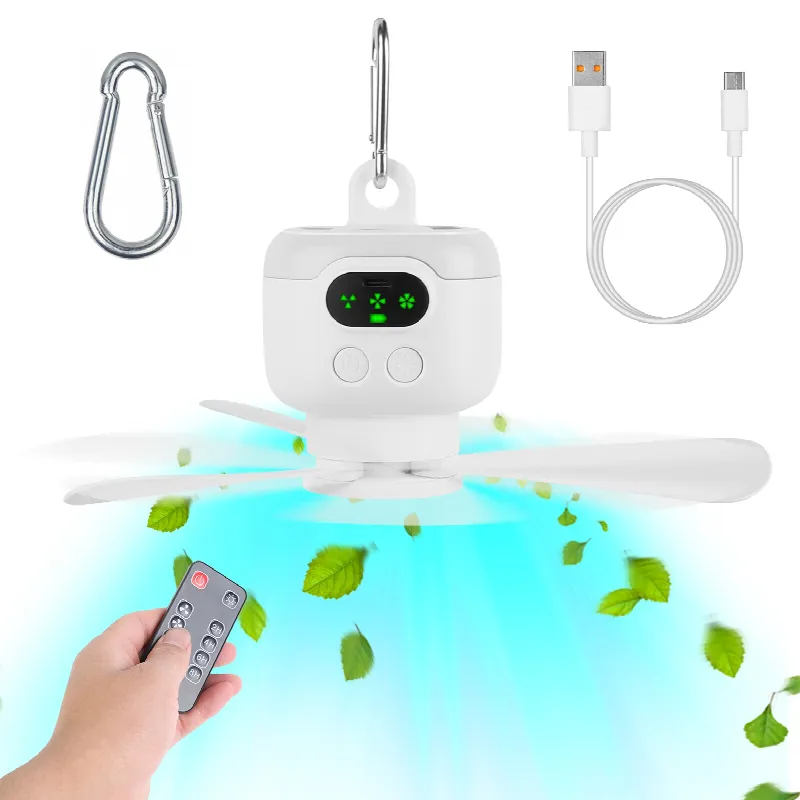
This fan-lantern combo directly solves the problem by providing airflow and light in one compact device. It is the most relevant pick for tents, cars, and campsite use.
What to look for before you buy
Start with runtime. Check how long the fan and light can run at low, medium, and high settings, because the longest setting often uses power fastest. If you plan to sleep with it on, the low setting should be useful, not just the brightest or strongest mode.
Also look at charging method, speed settings, and whether the light can run separately from the fan. A unit with multiple speeds gives you more control, and separate controls help you avoid using more power than needed.
- Enough runtime for the whole evening or night
- Multiple fan speeds
- Separate light and fan controls
- Stable base or secure hanging option
- Easy charging before the trip
The best places to use it
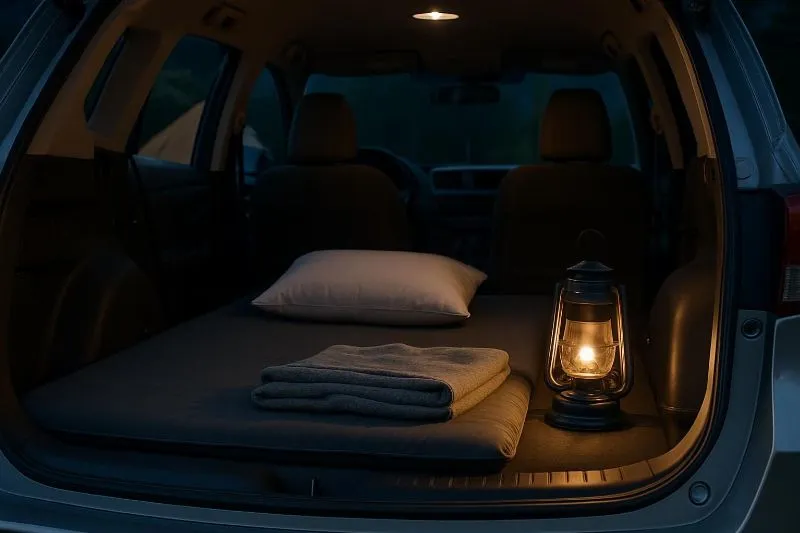
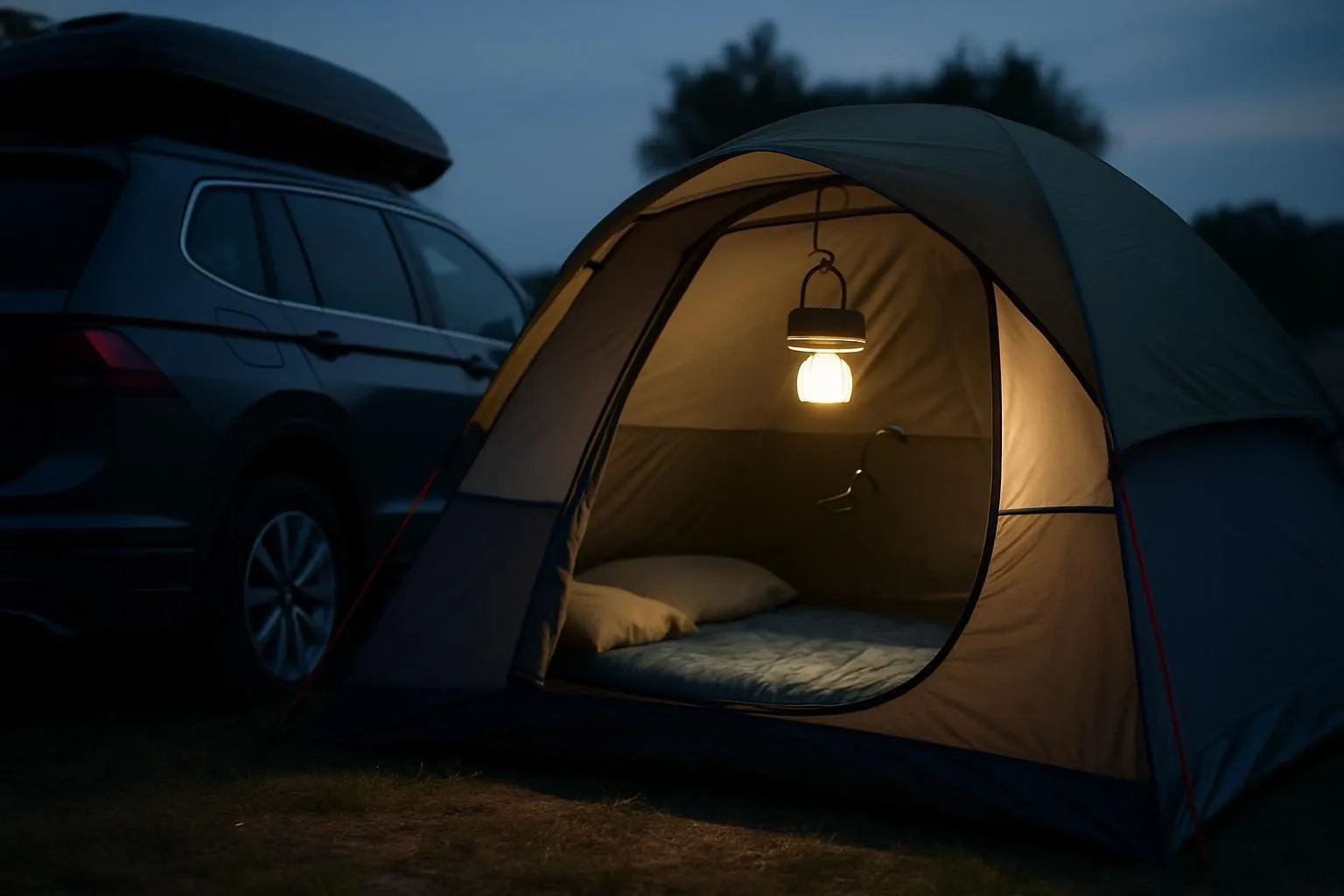
In a tent, place the fan-lantern high enough to push air across the sleeping area, but not so close that it blows dust or creates a cold draft. A hanging loop or hook can help, as long as it stays clear of heads, zippers, and fabric that could get caught.
In a car, set it where airflow can move forward through the cabin, but never where it blocks the driver’s view or interferes with pedals, airbags, or controls. At a campsite, aim it toward the area where people sit, cook, or change clothes so the airflow reaches where it is needed most.
- Hang it above sleeping height in a tent
- Keep it away from zippers and loose fabric
- Do not place it in front of the driver’s view
- Use it to circulate air in a sitting area
- Keep it out of wet ground and standing water
How to stretch runtime without sacrificing comfort
Use the lowest fan speed that still keeps air moving. Most of the time, steady circulation at a lower setting feels better than a blast of air for a short period. If the lantern is too bright for sleep, switch to a lower light level or turn the light off and keep the fan running.
Before bedtime, cool the space with the fan on a higher setting for a few minutes, then step down to a lower speed. That can help move trapped heat out of the space faster, so you do not need to run the highest setting all night.
- Start high, then reduce speed once the space cools
- Use light only when needed
- Avoid opening the unit repeatedly overnight
- Charge it fully before leaving home
This fan-lantern combo directly solves the problem by providing airflow and light in one compact device. It is the most relevant pick for tents, cars, and campsite use.
Placement mistakes that make it less effective
Pointing the fan straight at one spot is a common mistake. That can feel strong at first, but it does not always circulate air through the whole space. It is usually better to angle it so air moves across the area and out through a vent, window, or opening.
Another mistake is putting it where it gets buried by bedding, coolers, or bags. Airflow needs a clear path. If the intake or fan area is blocked, the unit has to work harder and may be less useful than you expect.
- Do not block the intake or vents
- Do not cover it with gear or blankets
- Angle airflow across the space, not just at one person
- Keep it on stable ground or a secure hook
Safety tips for tents, cars, and family camping
Keep cords, straps, and hanging points out of walkways and sleeping areas. If children are camping with you, use the right car seat or sleeping setup for their age and size, and keep the fan where it cannot be knocked over or grabbed easily.
For pets, use a proper restraint or carrier when traveling, and do not aim the fan so strongly that it stresses them. If you are using the fan in a vehicle, make sure it does not interfere with safe driving or distract the driver. Always follow your state’s rules for travel and camping safety when something is regulated.
- Keep it away from buckles, belts, and pedals
- Use a secure hook or stable surface
- Do not place it where it can tip into bedding
- Use proper restraints for pets and children
The bottom line
The simplest way to stay cooler is to pack one portable camping fan lantern, charge it fully, and place it where it can move air through your space without getting in the way. Use the lowest setting that feels comfortable, keep the airflow path clear, and you will get more comfort with less wasted power.
Gear that helps
Picked from our shop for this problem. Free tracked shipping to all 50 states, and save up to 10% when you buy 2 or more.
This fan-lantern combo directly solves the problem by providing airflow and light in one compact device. It is the most relevant pick for tents, cars, and campsite use.
Questions people ask
Can a portable camping fan lantern cool a tent enough for sleeping?
It will not replace air conditioning, but it can make a tent feel much more comfortable by moving stagnant air and helping sweat evaporate. For best results, use it with a ventilated tent and keep the fan aimed to circulate air, not just blow at one spot.
How long should the runtime be for overnight camping use?
That depends on how you plan to use it. If you want it on all night, look for a runtime that comfortably covers your sleep window on a lower setting. If you only need it at bedtime, shorter runtime can still work, as long as you know how much charge remains.
Where should I place a camping fan in a tent?
Place it where it can move air across the sleeping area without touching fabric or gear. Hanging it higher or setting it on a stable surface often works well, as long as the airflow path stays open and the unit stays secure.
Is it safe to use a fan-lantern in a car while parked?
Yes, if it is positioned safely and does not block visibility, pedals, airbags, or controls. Keep it secure so it cannot fall during movement, and never let it interfere with safe driving.